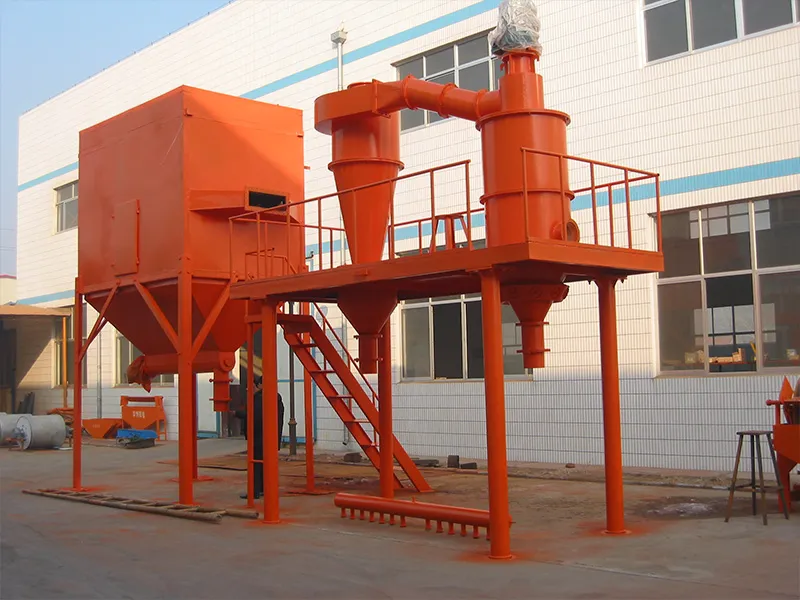
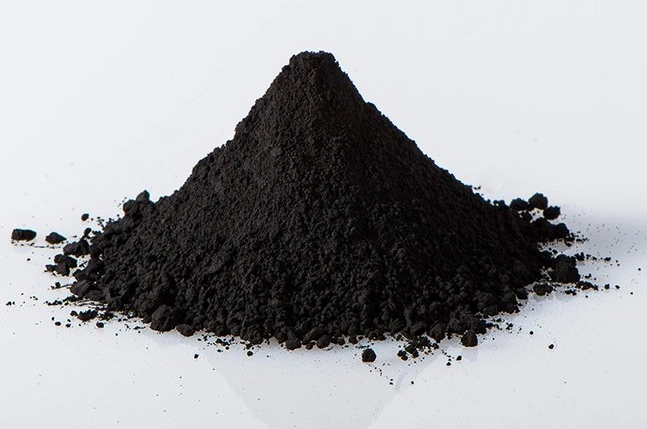
Black mass is the mixed cathode and anode powder that falls out of crushed battery shred. Copper and aluminum foil ride with it, and refiners pay less for a load that carries either one. Black mass classification removes the foils early, dry and mechanically, and that protects both the price and the chemistry downstream. The method reads the size and weight gap between black fines and metal foil. It adds no water to a hazardous stream.
Why Density Does Part of the Work
The density ladder is steep: copper weighs 8.96 g/cm3 and aluminum 2.70, while the black powder mass is lighter. With the cut placed between black fines and foil fragments, the flat foil pieces report to the coarse reject. The black powder follows the fine product.
Density alone does not finish the job, because the classifier reads aerodynamic size. A foil fragment behaves like a flat plate with high drag, unlike a compact particle of the same sieve size. The wheel sees how a particle flies, and foil flies wide and slow. Settling the cut therefore takes wheel speed, airflow and feed rate together. The air classifier working principle guide explains how those three levers interact.
Three Stages in Sequence
A black mass classification line rarely relies on a single cut. Shred arrives with a spread of sizes, so the plant splits the stream in stages. Each stage sharpens one boundary.
| Stage | Feed | Cut logic | Output |
|---|---|---|---|
| Coarse | Crushed shred | Flat, wide foil pieces separate early | Metal-rich reject |
| Middle | Composite mid fraction | Cut between black fines and foil slivers | Concentrated black mass |
| Fine | Fine dust | Graphite-rich fines caught below the cut | Carbon-rich fines fraction |
Wheel technology decides how cleanly each stage splits, and a worn wheel blurs the middle cut. Blurred cuts send foil into the black fraction, or they send black powder into the foil reject. Both errors cost money, one at the refinery gate and one in lost material. The classifier wheels guide covers the design choices that hold a cut sharp.
Closed Loop and Dust Control
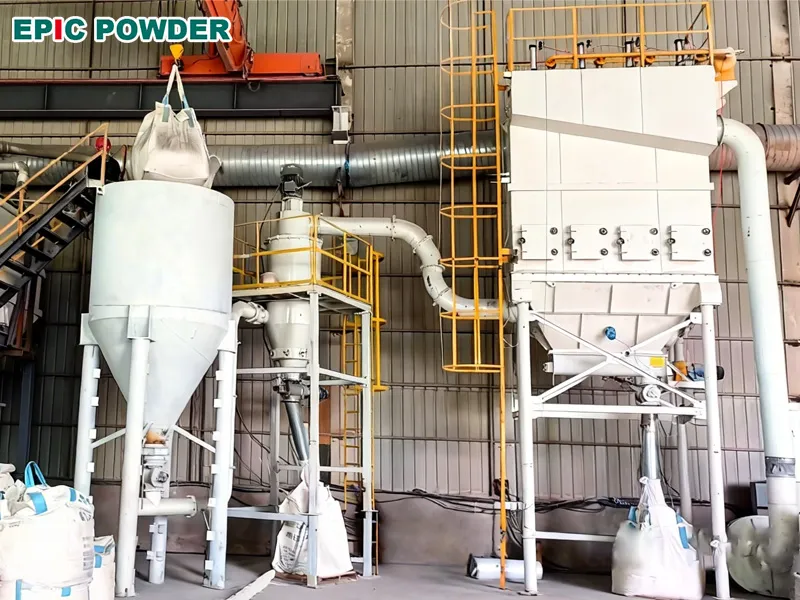
Black mass carries nickel and cobalt compounds, and the dust is hazardous to breathe. The classification stage therefore runs under negative pressure in a closed loop, with filtration on the exhaust. Operator exposure stays at zero when the loop holds. The loop also keeps lithium carbonate dust from drifting into the plant.
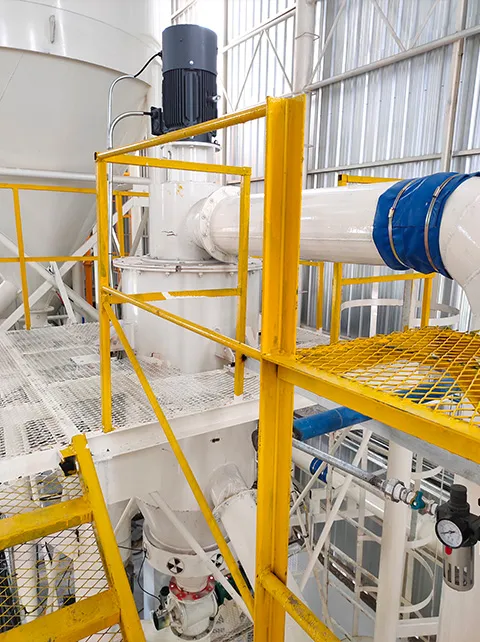
Dust control and cut stability share one dependency: steady airflow. Airflow drift moves the cut, and a moving cut moves yield hour by hour. Der rotor speed guide shows how the wheel and the air stream trade influence. It also explains why a stable feed rate matters as much as the setpoint.
What Black Mass Classification Does Not Do
Air classification is a physical step, and it ends at the physical boundary. It concentrates black mass and removes foils. It does not separate lithium from manganese, nickel or cobalt. Chemistry does that later, in leaching and solvent extraction lines operated by refiners.
The same honesty applies to yield claims. Published recovery figures for black mass processes vary widely. Most published numbers describe a full flowsheet, and few of them isolate the classification step. A clean foil separation is measurable, and it is the number a plant should promise. A trial reports it directly, and no public table can substitute for it.
What a Trial Must Report
A trial on real shred answers four questions. It should report the foil carryover in the black fraction and the black loss in the foil reject. Cut stability over several hours and dust containment complete the set. Those four numbers turn into a purchase decision: they price both the recovered metal and the lost black powder.
Plants that already run fine powder classification will recognise the method. The troubleshooting habits carry over, and the six-step carryover guide applies whenever the foil reject shows black powder again. The five-dimension selection guide then frames the equipment choice for the stage.
Can air classification replace chemical refining?
No. Classification removes foils and concentrates the black powder. Lithium, nickel, cobalt and manganese separate later in leaching and extraction lines, and the refiner sets those purities.
What particle size is black mass after crushing?
It varies with the shredder and the battery format, so the plant sets the cut on the real material itself. A trial measures the spread before the cut is placed.
Does the same line work for LFP black mass?
LFP carries iron phosphate, and the density contrast against foil still exists. The middle cut behaves differently from NMC material, though. A trial on LFP shred settles the stage settings before a line is quoted.
Episches Pulver
Epic Powder entwickelt Mahl- und Klassiersysteme für Mineralien, Chemikalien, Lebensmittel und Pharmazeutika. Mit über 20 Jahren Erfahrung in der Pulververarbeitung finden wir die passende Mühle für Ihre gewünschte Partikelgröße und Kapazität. Teilen Sie uns Ihre Materialanforderungen mit, und wir empfehlen Ihnen eine erprobte Lösung.

“Thanks for reading. I hope my article helps. If you are planning a recycling line, leave a comment with your shred size and target foil carryover. You may also contact EPIC Powder online customer representative Molly for any further inquiries.”
— Mark Dai, engineer