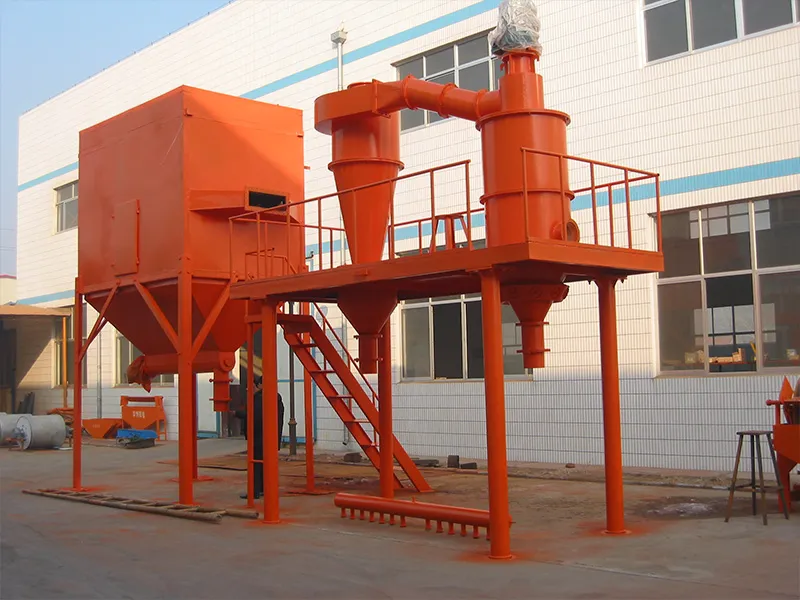
Talc holds a Mohs hardness of 1, so grinding it to size consumes little energy. The commercial value of the powder comes from other properties. Whiteness, softness, and the plate-like particle shape matter most, because plates give coatings their barrier behavior and plastics their stiffness. In every fine talc grade, an air classifier for talc decides which particles reach the customer. It performs that selection without touching the shape of the particles it passes. This separation of duties explains why talc plants treat classification as the quality step and grinding as the bulk step.
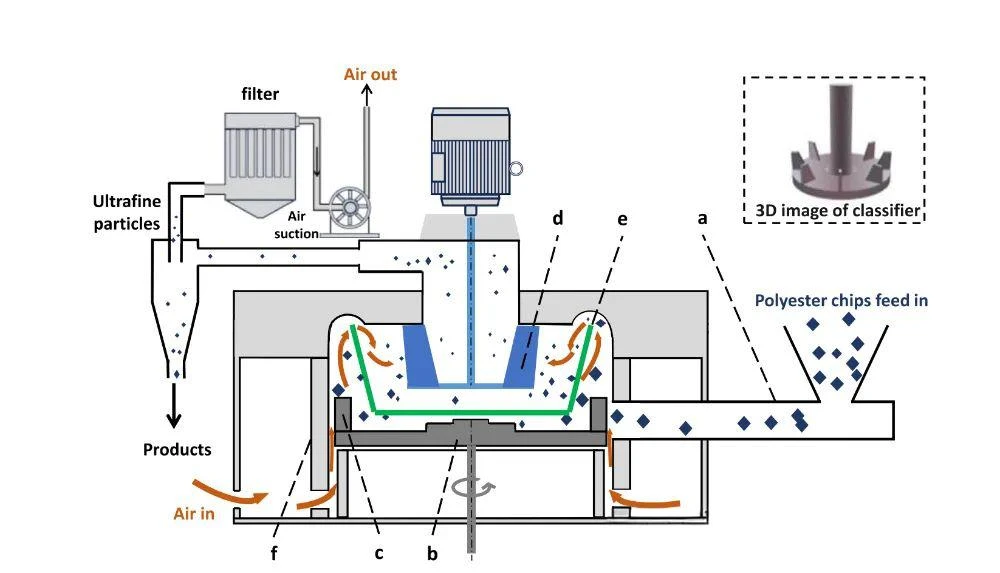
Why Talc Is a Classification Problem
A roller mill or an impact mill reduces talc feed to a wide size distribution quickly, since the mineral yields at low stress. That wide distribution is useless as a product, because it mixes coarse flakes, on-size plates, and oversize chips in one stream. Buyers specify top cut and fineness together, so the plant must remove the coarse tail and trim the fines share at the same time. Classification performs both cuts in one pass. The kaolin classifying technology used on the neighboring clay minerals follows the same logic. Talc degrades when it is re-ground hard, so the plant prefers to select the right particles and avoid grinding everything finer.

What the Classifier Protects, and What It Cannot
An air classifier separates particles by size and by aerodynamic response, and it never reshapes a particle. This fact controls the whole lamellarity question. The plate structure in saleable talc comes from the upstream step, where delamination peels the layers apart and random fracture breaks them. When the mill delaminates, the classifier collects plates. When the mill shatters them, the classifier collects fragments of the same top cut with a poorer aspect ratio. The classifier preserves what the mill delivers, so protect lamellarity at the grinding stage first. Plants that need both plates and a tight top cut therefore run a gentle delamination step ahead of the wheel. The classifier then keeps the product free of coarse dilution while the shape survives.
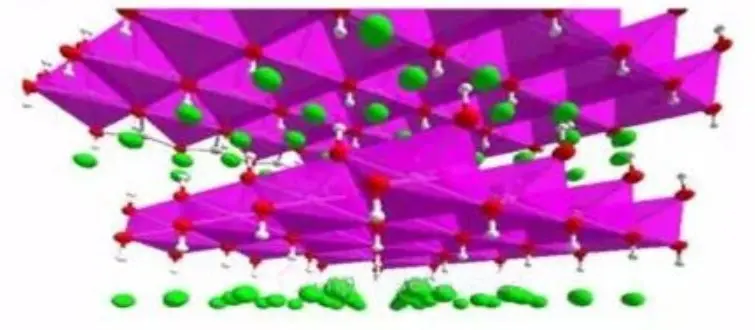
Aspect ratio belongs in the trial protocol beside the laser size report. A particle size distribution alone can hide a shape loss. Two lots with identical D97 values can differ sharply in plate count, and the difference shows up in coating barrier tests. Photograph a few field-emission samples at each trial point, and file them with the size data. The cost is small, and the evidence settles shape disputes before they reach the customer.
Top-Cut Targets by Application
Each talc market sets its own fineness band, and the classifier setting follows the band. The table below lists the common targets in microns, with mesh values given approximately for reference.
| Application | Typical fineness | Classification focus |
|---|---|---|
| Plastics and masterbatch | D97 about 45 µm (325 mesh) | Remove oversize chips that seed stress points |
| Paints and coatings | D97 about 20-30 µm | Tight top cut for surface finish and film integrity |
| Paper filling | About 200-325 mesh | Steady cut point at high throughput |
| Ceramics | About 325 mesh | Consistent coarse-tail removal for pressing behavior |
| Cosmetics | About 5-20 µm | Fine cut with controlled fines share for skin feel |
Treat every band as a starting point, since each buyer runs its own acceptance test. The ranges above describe common industrial practice. Contracts settle the final numbers, and the classification setting follows the contract.
Low-Density Feed and Dispersion
Talc challenges the feed side of a classifier more than the wheel side. Its bulk density runs low and the powder holds air, so the feed streams unevenly and the cut point wanders with it. A metered rotary feeder or a speed-controlled screw feeder holds the mass flow steady. Uniform mass flow keeps the wheel working against one concentration, away from alternating flood and starvation. Agglomerates add a second trap. Loosely bonded plates measure coarse in the wheel, so they get rejected although the plates inside are fine enough to sell. Disperse the feed before the wheel, since agglomerates cost yield twice, once in the reject and once in the rework. The secondary air in a turbo wheel assists this dispersion, and the classifier selection guide lists the dimensions that matter here.
Wheel Speed, Air Volume and the Trade
The two control variables behave predictably. Raising wheel speed lowers the cut size, and raising air volume raises it. A plant therefore walks these two settings to hold a target D97. The trade appears in throughput. A fine cut at high wheel speed passes fewer particles per hour, and the yield of on-size plates falls with every rejected agglomerate. Hold the air volume first and trim wheel speed in small steps, since chasing a fine cut with airflow alone widens the distribution. The same discipline applies across minerals, and the alumina classification work shows how a tight cut is held on a much harder powder.
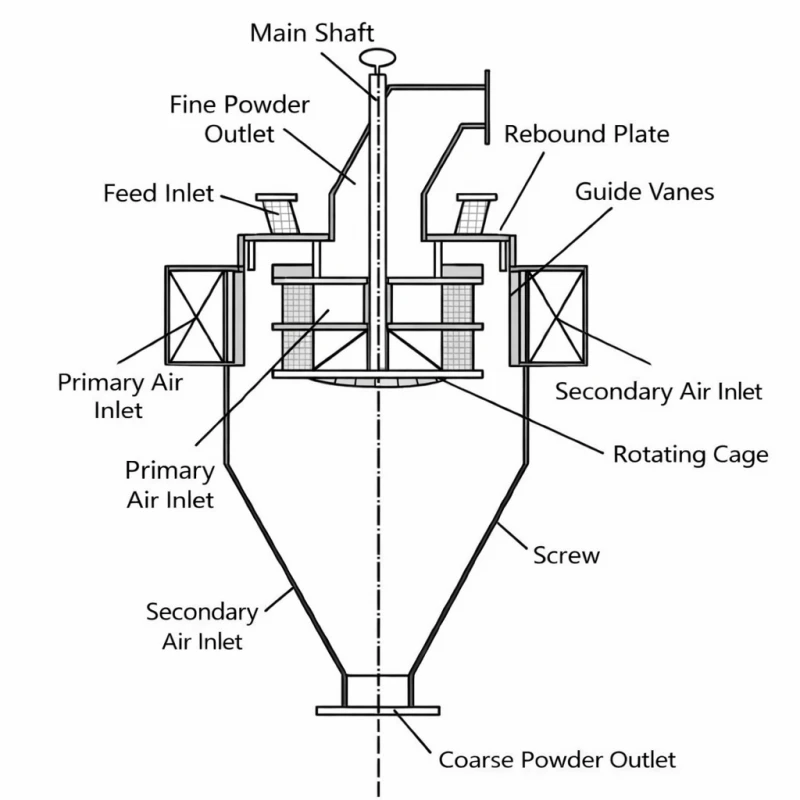
Wheel and Lining Materials for Talc Service
Talc is soft, and this changes the materials conversation. A turbo wheel in hardened steel runs for years on talc service, because cutting wear stays mild. High-purity grades change the picture. White talc for cosmetics or pharmaceuticals tolerates no iron dust, so stainless contact parts and ceramic-lined paths earn their premium there. Wheel balance still needs a check at each service, because a plate jam can bend a vane. A bent vane shifts the cut point sideways, and the shift looks like a control problem on the panel. Check the wheel balance at every service before touching the speed settings. The overview of ultrafine classification equipment compares the wheel types on offer, and it notes which designs suit clean-room duty.
Position in a Talc Line
A talc line usually pairs a fine grinder with a closed-circuit classifier. The mill reduces feed continuously. The classifier splits the stream, and coarse plates return to the mill while on-size plates exit to collection. Plants that already own a grinder add a classifier as a retrofit. The ductwork stays modest, because the classifier takes its feed directly from the mill circuit. The clay family provides the closest reference cases. The attapulgite classification work documents the same soft-mineral behavior, and the same feeder discipline applies there.
A trial settles the economics. Run the customer’s fineness band on a representative talc lot. Record yield at each wheel speed, and check aspect ratio beside the size report. The numbers from that run carry straight into the production setting, and they give the buyer a baseline for every later audit.
Trials on talc also carry a moisture angle. Talc adsorbs little water, but stored lots differ in surface humidity. Humid plates cling together in the feed hopper, and the metered feeder then starves the wheel. Dry the lot or run it straight from a warm silo, and note the storage history beside the trial data. The same lot tested in January and July can yield differently for that reason alone.
FAQ
Does classification damage the plate structure of talc?
No, the wheel selects particles by size and aerodynamic behavior, and it applies no crushing force. Shape changes come from the grinding stage. Delamination settings therefore belong ahead of the classifier.
Why does talc feed need dispersion when harder minerals do not?
Talc plates bond loosely into agglomerates, because their surfaces are large and clean. These agglomerates measure coarse in the wheel, so they get rejected even though the plates inside are fine. Dispersion recovers that yield.
Can one classifier serve several talc grades?
Yes, a turbo wheel covers the bands in the table through speed and air volume changes. The practical limit comes from changeover time. Each grade switch needs a clean-out and a new setting.

“Thanks for reading. I hope my article helps. Please leave a comment down below. You may also contact EPIC Powder online customer representative Molly for any further inquiries.”
— Emily Chen, Engineer