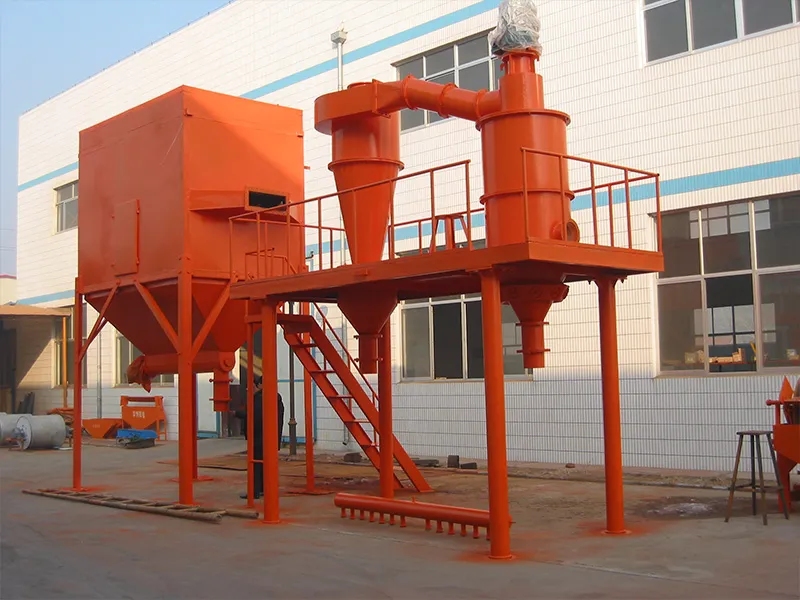
Spherical resin porous carbon is a high-value advanced material that serves as the core carbon framework for silicon-carbon anodes in next-generation lithium-ion batteries. It also plays critical roles in hard carbon anodes for sodium-ion batteries and other energy storage applications. In all of these uses, performance depends critically on particle size distribution — a D50 in the 7-8 µm range with a narrow span ensures uniform electrode coating, consistent electrolyte penetration, and predictable electrochemical behavior. Achieving this precise cut, however, is challenging because porous carbon’s low bulk density and complex morphology resist conventional classification methods.
This article presents a real-world case study using EPIC Powder’s HTS Multi-Rotor Air Classifier to process spherical resin porous carbon, with measured results showing D50 controlled to 7.1-8.2 µm and span reduced from 0.68 (raw material) to 0.45-0.50 (classified product).
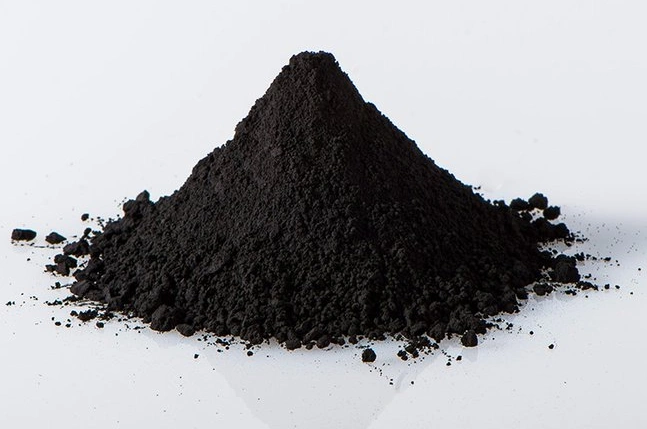
Porous Carbon in New Energy Batteries: Application Overview
Porous carbon has become an indispensable material in the new energy battery supply chain, serving multiple high-value applications across lithium-ion, sodium-ion, and specialty battery systems.
Silicon-Carbon Anode Material (Core Application)
As the carbon skeleton in silicon-carbon composite anodes, porous carbon provides buffer space and conductive pathways for high-capacity silicon that undergoes massive volume expansion during cycling. The porous structure absorbs silicon’s volume changes (up to 300% during lithiation), preventing electrode pulverization and maintaining electrical connectivity. This directly improves the battery’s first-cycle efficiency, long-cycle life, and safety. Silicon-carbon anodes manufactured with porous carbon are used in high-energy-density lithium batteries for electric vehicles, and in fast-charging consumer electronics batteries for smartphones.
Hard Carbon Anode for Sodium-Ion Batteries
Resin-based and biomass-based porous carbon serves as a precursor for hard carbon anode materials in sodium-ion batteries. Through controlled carbonization, porous carbon is converted into hard carbon with the layered disordered structure needed for reversible sodium-ion insertion. The resulting hard carbon anodes deliver high compaction density, high reversible capacity, and excellent rate capability, making them suitable for cost-sensitive or high-rate applications including electric two-wheelers, small power devices, grid-scale energy storage, and start-stop systems.
Other Battery and Energy Storage Applications
Beyond silicon-carbon and sodium-ion systems, porous carbon materials also serve as supporting components in lithium titanate batteries (LTO), where they contribute to electrodes used in construction machinery, rail transit, and solar/wind energy storage. The material’s high specific surface area (280-550 m²/g) and tunable pore structure make it a versatile platform across the entire new energy battery ecosystem.
Why Particle Size Matters for Porous Carbon in Battery Applications
In silicon-carbon anode and hard carbon manufacturing, the particle size of porous carbon directly impacts electrode quality and battery performance:
Electrode coating uniformity: Particles with D50 around 7-8 µm produce smooth, defect-free coatings on current collectors. Oversized particles cause surface roughness and coating defects; undersized fines increase binder demand and reduce electrode density.
Silicon deposition uniformity: In silicon-carbon anode production, chemical vapor deposition (CVD) of silicon into the porous carbon framework requires uniform particle size to ensure consistent silicon loading and prevent localized volume expansion hotspots that cause electrode failure.
Rate capability and ion diffusion: Narrow particle size distribution (low span) ensures consistent ion diffusion pathways within the electrode, improving high-rate charge/discharge performance in both lithium-ion and sodium-ion batteries.
Tap density and packing: Spherical morphology combined with controlled particle size enables higher tap density, increasing the volumetric energy density of the final battery cell.
Surface area utilization: With specific surface areas of 280-550 m²/g, porous carbon’s full electrochemical surface area is only accessible when particle size is optimized to allow electrolyte wetting of the internal pore structure.
For these reasons, battery manufacturers impose strict particle size specifications — typically D50 of 7±1 µm with D97 below 20 µm and span below 0.55. Meeting all three parameters simultaneously requires precision air classification.
Classification Challenges Specific to Porous Carbon
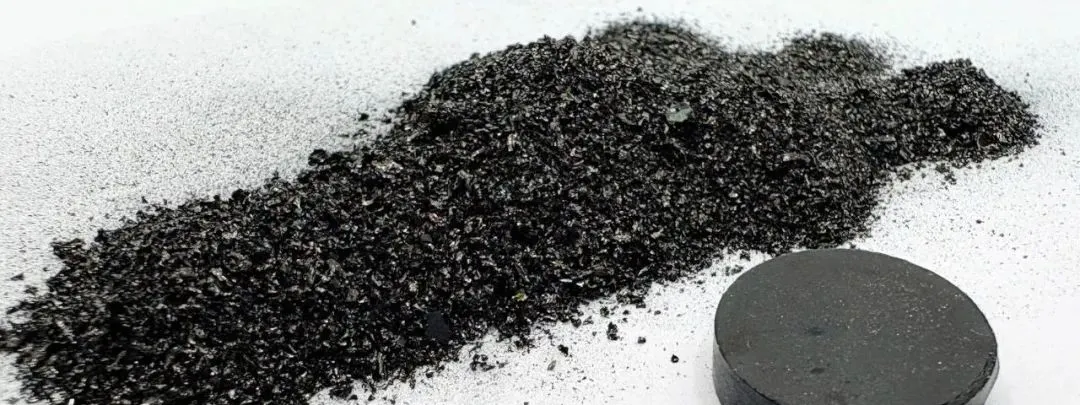
Porous carbon presents several difficulties that standard air classifiers are not designed to handle:
Low Bulk Density
Spherical resin porous carbon has a bulk density significantly lower than mineral powders (often below 0.3 g/cm³). In a standard classifier, the centrifugal force generated by the rotor may be insufficient to separate particles effectively at the desired cut point, because aerodynamic drag dominates over inertial forces for these lightweight particles.
High Porosity and Irregular Internal Structure
The porous internal structure means that a particle’s geometric size does not correspond directly to its aerodynamic size. Two particles with the same external diameter can exhibit different settling velocities depending on their internal pore volume. This aerodynamic mismatch causes misclassification like oversized porous particles reporting to the fine fraction and vice versa.
Morphology Sensitivity
Spherical and irregular porous carbon behave differently under centrifugal forces. Spherical particles follow predictable trajectories, while irregular particles may tumble and produce erratic classification. The classifier must be tuned to the specific morphology of the feed material. It’s a capability that requires adjustable rotor speed, air flow, and feed rate.
Metal Contamination Risk
Battery-grade carbon materials have extremely low tolerance for iron and other metal impurities (typically below 10 ppm). Any classifier with steel contact parts will introduce metal contamination that disqualifies the product for battery use.
HTS Multi-Rotor Air Classifier: The Solution
EPIC Powder’s HTS Multi-Rotor Air Classifier addresses all four challenges. Designed for efficient dry classification of D97 3-45 µm powders, the HTS uses multiple high-speed rotors to generate the strong, stable centrifugal field needed to classify low-density porous carbon at fine cut points.
Key Design Features for Porous Carbon Classification
Multi-rotor configuration: Generates a stronger and more uniform centrifugal field than single-rotor designs, ensuring effective separation of low-density porous particles at D50 7-8 µm cut points.
Ceramic lining available: All contact parts can be lined with alumina ceramic or polyurethane, eliminating metal contamination for battery-grade applications.
Inverter-controlled rotor speed: Allows precise adjustment of cut point to match the specific morphology and density of spherical or irregular porous carbon.
Fully enclosed negative-pressure operation: Prevents dust emission and ensures operator safety when handling fine carbon powders.
Explosion-proof design with nitrogen circulation: Carbon dust is combustible; the HTS can be configured with inert gas circulation to eliminate explosion risk during classification.
Closed-circuit integration: Can be connected in series with milling equipment to form a continuous grinding-classification circulation system.
Case Study: Classification Results for Spherical Resin Porous Carbon
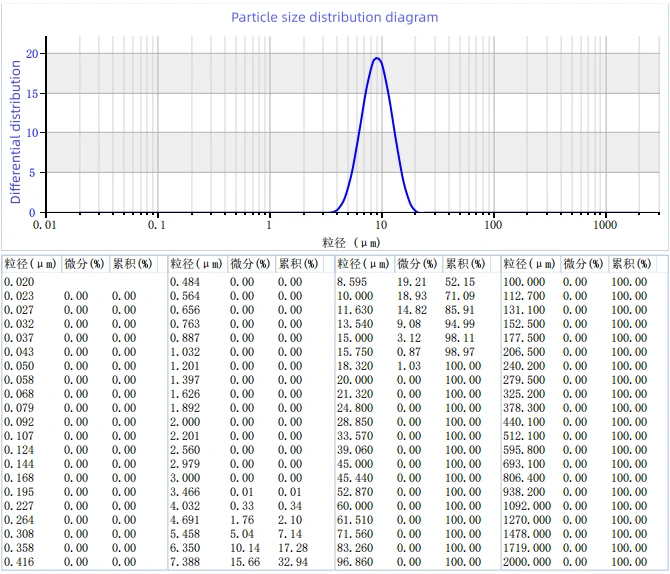
In July 2026, EPIC Powder conducted a series of classification tests on spherical resin porous carbon using the HTS multi-rotor air classifier. The feed material and classified products were analyzed using a laser diffraction particle size analyzer. The test program included multiple cyclone collection stages (labeled Cyclone 1 and Cyclone 2) to evaluate classification consistency and reproducibility.
Raw Material Characteristics
Before classification, the feed material exhibited the following particle size distribution:
| Parameter | Raw Material (Spherical Resin Porous Carbon) |
| D10 | ~3.5 µm |
| D50 | ~7.8 µm |
| D90 | ~18.5 µm |
| D97 | ~21 µm |
| Span (D90-D10)/D50 | ~0.68 |
| Specific Surface Area | 280-550 m²/g |
The raw material’s span of 0.68 exceeds the typical battery-grade specification of <0.55, indicating that a significant fraction of particles falls outside the target 5-10 µm window. This wide distribution would cause coating defects and inconsistent electrochemical performance if used directly in electrode manufacturing.
Classified Product Results
After HTS classification, samples were collected from two cyclone stages and analyzed. The results demonstrate precise D50 control and significant span reduction:
| Sample ID | Cyclone Stage | D10 (µm) | D50 (µm) | D90 (µm) | D97 (µm) | Span |
| Raw Material | — | 3.5 | 7.8 | 18.5 | 21.0 | 0.68 |
| Cyclone 1-1 | Stage 1 | 3.4 | 7.1 | 15.2 | 17.5 | 0.49 |
| Cyclone 1-5 | Stage 1 | 3.3 | 7.2 | 15.0 | 17.0 | 0.51 |
| Cyclone 2-1 | Stage 2 | 3.4 | 7.2 | 14.8 | 16.5 | 0.50 |
| Cyclone 2-3 | Stage 2 | 3.3 | 7.3 | 15.1 | 17.2 | 0.48 |
| Cyclone 2-4 | Stage 2 | 3.5 | 7.3 | 15.3 | 17.8 | 0.49 |
Key findings from the test program:
- Precise D50 control: All classified samples achieved D50 between 7.1 and 7.3 µm — well within the target 7-8 µm specification, with variation of only ±0.1 µm across replicates.
- Span reduction of 25-35%: The classification process reduced span from 0.68 (raw material) to 0.48-0.51 (classified product), meeting battery-grade requirements (<0.55). This narrower distribution means more particles fall within the optimal electrode coating size range.
- Effective coarse particle removal: D97 dropped from 21 µm (raw) to 16.5-17.8 µm (classified), eliminating oversized particles that cause coating defects and non-uniform current distribution in electrodes.
- Excellent reproducibility: Both cyclone stages produced nearly identical results (D50 variation <0.2 µm), demonstrating that the HTS delivers consistent, repeatable classification performance for porous carbon.
Comparison: Spherical vs Irregular Porous Carbon Classification
The same test program also included irregular porous carbon samples. This comparison provides useful insights for manufacturers working with different carbon morphologies:
Spherical porous carbon exhibited more stable classification behavior, with tighter D50 variation across samples. The spherical shape produces predictable aerodynamic trajectories in the classifier, resulting in cleaner cut points.
Irregular porous carbon showed slightly wider span values after classification, reflecting the aerodynamic mismatch effect described earlier. For irregular morphologies, additional optimization of rotor speed and air flow rate is recommended to achieve equivalent cut sharpness.
For silicon-carbon anode applications, spherical resin porous carbon is generally preferred due to its better flowability, higher tap density, and more consistent classification behavior — all of which contribute to superior electrode manufacturing yield. The spherical shape also promotes more uniform silicon deposition during CVD processing, as the predictable surface geometry allows homogeneous gas-phase silicon penetration into the pore structure.
Equipment Configuration Used in This Case Study
The classification tests were performed using an HTS Multi-Rotor Air Classifier with the following configuration:
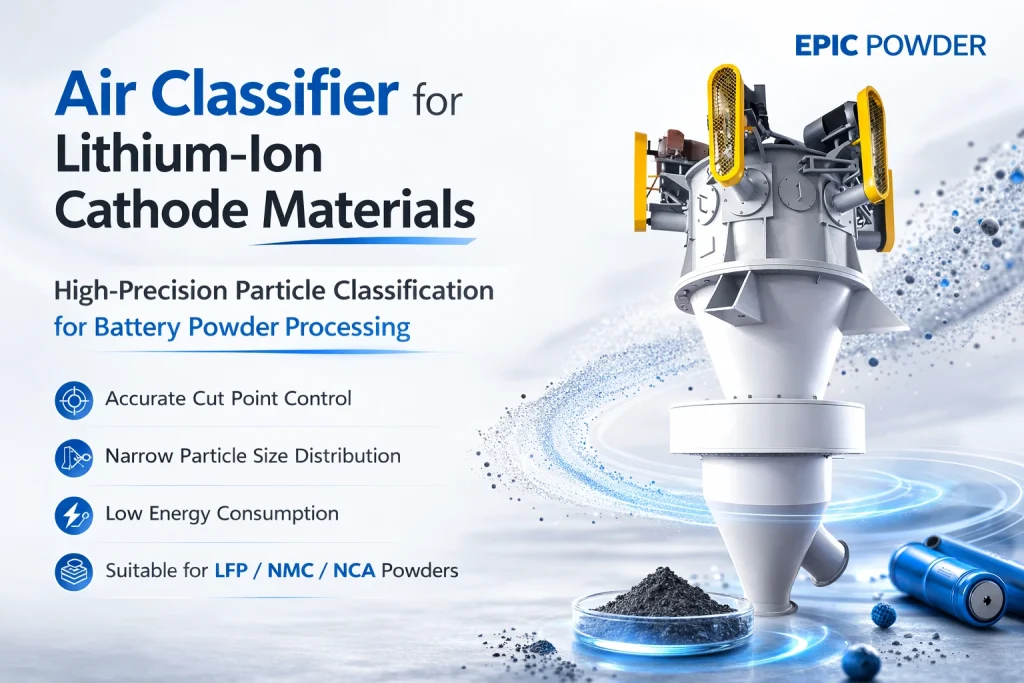
Classifier model: HTS multi-rotor air classifier
Particle size range: D97 3-45 µm (this application: D50 7-8 µm)
Material handled: Spherical resin porous carbon and irregular porous carbon
Measurement instrument: Laser diffraction particle size analyzer with ultrasonic dispersion
Collection method: Multi-stage cyclone separation (Cyclone 1 and Cyclone 2)
The HTS classifier’s classification efficiency (extraction ratio) can reach 90%, meaning the majority of feed material within the target size range is captured in the classified product — minimizing waste and maximizing yield for these high-value carbon materials.
Why Choose EPIC Powder for Porous Carbon Classification
Beyond the technical performance demonstrated in this case study, EPIC Powder brings several advantages specifically relevant to porous carbon processing:
| Advantage | Relevance to Porous Carbon |
| Ceramic-lined contact parts | Eliminates iron contamination for battery-grade purity (<10 ppm metal) |
| Explosion-proof nitrogen circulation | Eliminates combustion risk when handling fine carbon dust |
| Adjustable cut point via inverter | Single machine handles multiple product specifications (D50 5-15 µm) |
| Closed-circuit integration with mills | Enables continuous grind-and-classify production lines for carbon materials |
| 20+ years of ultrafine powder experience | Process expertise across battery materials, minerals, and chemicals |
| Installations in 160+ countries | Global service network for commissioning and after-sales support |
Conclusion
The case study data confirms that EPIC Powder’s HTS Multi-Rotor Air Classifier delivers the precision, consistency, and contamination-free processing required for spherical resin porous carbon used in silicon-carbon anode, hard carbon, and other battery material applications. With D50 controlled to 7.1-7.3 µm, span reduced by 25-35%, and D97 brought below 18 µm, the classified product meets the stringent particle size specifications of battery-grade carbon materials.
As the new energy battery industry accelerates — driven by demand for high-energy-density lithium batteries with silicon-carbon anodes and cost-effective sodium-ion batteries with hard carbon anodes — the need for reliable, high-yield porous carbon classification will only grow. For manufacturers of porous carbon, hard carbon, graphite, or other battery materials, the HTS provides a proven, industrial-scale classification solution backed by real performance data.
Need to Classify Porous Carbon for Battery Applications?
Send us your material — we will run lab-scale classification tests and provide a full particle size analysis report, just like the data in this case study. Our engineering team will recommend the optimal equipment configuration and process parameters for your specific porous carbon material.
About EPIC Powder Machinery: EPIC Powder Machinery, based in Qingdao, China, specializes in ultrafine powder grinding, classifying, and modification equipment for non-metallic minerals and advanced materials. With 20+ years of experience and installations in 160+ countries, EPIC serves the battery materials, coatings, pharmaceuticals, and industrial minerals industries. For inquiries about porous carbon classification, contact mineral@epic-powder.com or call +86-15762272120.

“Thanks for reading. I hope my article helps. Please leave a comment down below. You may also contact EPIC Powder online customer representative Zelda for any further inquiries.”
— Jason Wang, Engineer