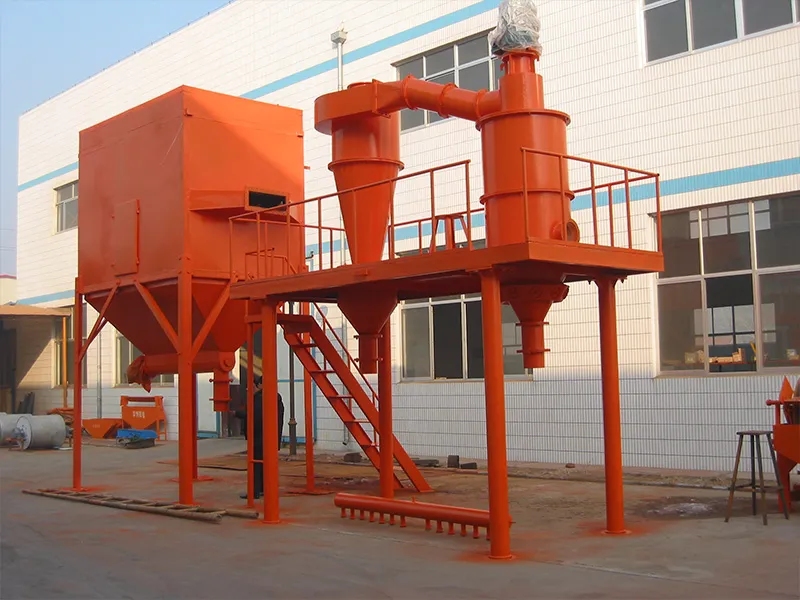
Calcium oxide, commonly known as quicklime, is a fundamental raw material used across a wide range of industries including metallurgy, building materials, environmental protection, and chemical manufacturing. In each of these applications, the performance of calcium oxide powder depends heavily on its particle size distribution. Too coarse, and the reaction rate becomes too slow. Too fine without control, and handling difficulties arise.
However, classifying calcium oxide presents a unique set of technical challenges. Unlike many other minerals, calcium oxide is highly hygroscopic and reacts vigorously with water. This means that traditional wet classification methods are completely unsuitable. The only practical approach is dry classification, which places strict demands on the equipment used. The classifier must be fully sealed to prevent moisture from entering the system. It must also be robust enough to handle the abrasive nature of quicklime while preventing metal contamination that could discolor the final product.
This is where the Epic Powder HTS series air classifier comes into play. Designed specifically for efficient dry classification of powders in the D97 8 to 200 micron range, the HTS315 model has proven particularly effective for calcium oxide applications. In this article, we will examine a real-world case where the HTS315 successfully classifies calcium oxide from a 300 mesh feed, producing a fine fraction of D97 8μm and a coarse fraction of D50 16.5μm at a stable throughput of 600 kilograms per hour.
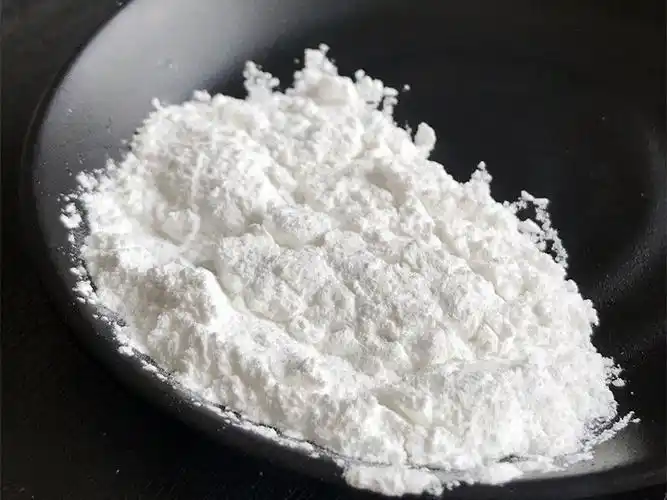
Classifying Calcium Oxide from 300 Mesh Feed
To understand the capability of the HTS315 air classifier, it helps to look at an actual application scenario. In this case, the feed material is calcium oxide powder that has already been ground to approximately 300 mesh, which corresponds to a median particle size of around 48 microns. The goal is to separate this feed into two distinct fractions.
The fine fraction must meet a specification of D97 8 microns, meaning that 97 percent of the particles in this stream are smaller than 8 microns. This ultra-fine powder is typically used for high-value applications such as specialized chemical reactions or high-performance coatings. The coarse fraction, with a D50 of 16.5 microns (median particle size), can be used as a medium-grade product or returned to the grinding circuit for further size reduction.
The following table summarizes the key parameters of this application.
| Parameter | Value |
|---|---|
| Equipment Model | HTS315 |
| Feed Particle Size | 300 mesh (approx. 48 microns) |
| Throughput Capacity | 600 kg/h |
| Target Fine Powder | D97 = 8 microns |
| Target Coarse Powder | D50 = 16.5 microns |
What makes this case particularly noteworthy is the efficiency of the separation. The HTS315 takes a feed where the median size is already 48 microns and successfully extracts a fine fraction where 97 percent of the particles are below 8 microns. This represents a significant reduction in particle size through classification alone, without additional grinding. The coarse fraction, with a D50 of 16.5 microns, sits in between the feed and the fine product, demonstrating the sharp cut achieved by the machine.
Why HTS Series Air Classifier Suits Calcium Oxide Well
The HTS series air classifier is not a generic piece of equipment. Several specific design features make it particularly well suited for demanding materials like calcium oxide. The operating principle of the HTS classifier is based on the combined effects of centrifugal force, gravity, and inertial force. As powder enters the classification chamber, the rotating classifier wheel creates a strong centrifugal field. Fine particles that meet the size cut are pulled through the wheel blades by the airflow and collected as product. Coarse particles cannot overcome the centrifugal force and are rejected to the outer zone, where they exit through the coarse outlet. This mechanism allows for a very accurate vertex cut, meaning the separation between fine and coarse fractions occurs at a precisely controlled particle size.
For calcium oxide specifically, the HTS series offers several critical advantages.
The first is the option for ceramic wear materials. Calcium oxide can be abrasive, and standard metal components may introduce iron contamination into the powder. This is unacceptable for many high-purity applications, as iron can discolor the white or light-colored quicklime. Epic Powder offers ceramic-lined components that eliminate metal contamination entirely, preserving product purity while extending the service life of wear parts.
The second advantage is the fully enclosed negative pressure operation. The entire classification process takes place inside a sealed system that operates under negative pressure. This means no dust can escape into the surrounding environment, which is essential for both worker safety and product quality. More importantly for calcium oxide, the sealed system prevents moisture from the ambient air from entering and reacting with the quicklime. Hydration of calcium oxide is a serious concern, and the HTS design effectively eliminates this risk.
The third advantage is flexible particle size adjustment. The speed of the classifier wheel is controlled by a variable frequency drive. This allows the operator to adjust the cut point easily and precisely, without stopping the machine or changing mechanical parts. For a material like calcium oxide where product specifications may vary between batches, this flexibility is invaluable.
Key Performance Advantages Demonstrated in This Case
The calcium oxide classification case described earlier highlights several measurable performance advantages of the HTS315. The table below summarizes these key benefits.
| Advantage | Description |
|---|---|
| High Classification Precision | Separates D97=8μm fine powder directly from 48μm feed with accurate cut point control. |
| High Extraction Rate | Classifying efficiency can reach over 90 percent, meaning minimal valuable fine material is lost to the coarse fraction. |
| Stable Throughput | Handles 600 kg/h of calcium oxide consistently, suitable for both pilot-scale and industrial production lines. |
| Clear Coarse Fraction Value | The coarse powder at D50=16.5μm is not waste. It can be used as a medium-grade product or returned for regrinding. |
The high classification precision is perhaps the most impressive aspect. Achieving a D97 of 8 microns from a feed where the median size is already 48 microns is a challenging separation. The HTS315 accomplishes this with a sharp cut, meaning there is very little overlap between the fine and coarse fractions. This sharpness translates directly into product quality and consistency.
The extraction rate, often called classifying efficiency, is another critical metric. An efficiency above 90 percent means that more than nine out of every ten particles that are fine enough to be in the product actually end up there. Low efficiency would mean that valuable fine powder is being sent back to the grinding circuit or discarded with the coarse fraction, representing both a quality loss and an economic loss. The HTS315 minimizes this waste.
How HTS315 Fits into a Complete Calcium Oxide Processing Line
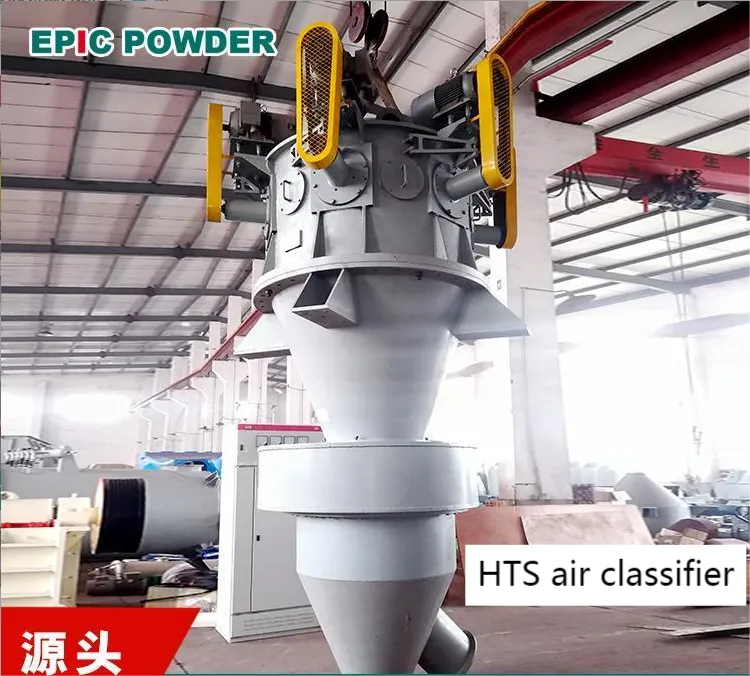
The HTS315 air classifier is rarely used as a standalone machine. In most industrial applications, it is integrated into a complete processing system that includes grinding equipment, material handling, and dust collection. Understanding how the HTS315 fits into this broader system helps appreciate its role.
A typical calcium oxide processing line might begin with a mill, such as a ring roller mill, ball mill, or mechanical impact mill. The raw calcium oxide is fed into the mill, which reduces the particle size down to a target range. In our case study, the mill would be set to produce a discharge of approximately 300 mesh, or 48 microns median size. This discharged material is then pneumatically conveyed to the HTS315 air classifier.
Inside the classifier, the feed is separated into fine and coarse fractions as described earlier. The fine fraction, meeting the D97 8 micron specification, is carried by the airflow to a collection device such as a cyclone or bag filter. This becomes the finished product for high-end applications.
The coarse fraction, with a D50 of 16.5 microns, exits through a separate outlet. The operator has two choices for this material. It can be collected as a secondary product for applications that require a medium particle size. Alternatively, it can be returned to the inlet of the mill for further grinding, creating a closed-loop system. In this configuration, the mill and classifier work together continuously. The mill reduces the particle size of the recirculating load, and the classifier ensures that only material meeting the final specification leaves the system.
The entire process operates under negative pressure within a closed circuit. This not only prevents dust emissions but also allows for the integration of a drying function if needed. For calcium oxide, which must be kept dry, this closed-loop design is essential for maintaining product quality.
Technical Specifications of HTS315 Related to This Application
For engineers and plant operators evaluating equipment, technical specifications provide the necessary detail to make a purchasing decision. The HTS315 air classifier has been engineered to deliver consistent performance across a range of materials, including calcium oxide.
The model number HTS315 refers to the diameter of the classifying wheel in millimeters. This size strikes a balance between processing capacity and classification precision, making it suitable for small to medium-scale production lines.
The typical classification range for the HTS series is D97 8 to 200 microns. This means the machine can efficiently separate powders with target cut points anywhere within this range. For calcium oxide, the sweet spot is often at the finer end of this spectrum, as demonstrated by the D97 8 micron target in our case study.
Regarding construction materials, Epic Powder offers several options to match the specific requirements of the application. Standard carbon steel is suitable for many general purposes. Stainless steel is available for applications requiring corrosion resistance or stricter hygiene standards. For high-purity applications where metal contamination is unacceptable, ceramic-lined components can be supplied. These ceramic parts come into contact with the powder and eliminate the risk of iron contamination entirely.
The sealing system on the HTS315 deserves special mention. The classifier wheel shaft uses a combination of labyrinth seals and air purging to prevent fine powder from leaking out along the rotating shaft. This is a common failure point on lesser machines, but the HTS design has proven reliable even with very fine and abrasive materials like calcium oxide.
HTS air Classifier – A Reliable Solution for Ultra-fine Calcium Oxide
Classifying calcium oxide is not a simple task. The material’s reactivity with moisture, its abrasive nature, and the demand for high purity all create challenges that many classifiers cannot handle effectively. The HTS315 air classifier from Epic Powder has been specifically designed to meet these challenges head on.
The real-world case examined in this article demonstrates the machine’s capability. Starting from a 300 mesh feed with a median size of 48 microns, the HTS315 consistently produces a fine fraction of D97 8 microns and a coarse fraction of D50 16.5 microns, all at a stable throughput of 600 kilograms per hour. The classification precision is high, the extraction rate exceeds 90 percent, and the closed, negative-pressure operation protects the calcium oxide from moisture contamination.
For processors of calcium oxide and similar materials, the HTS315 offers a reliable, efficient, and flexible solution. Whether you need to produce ultra-fine powder for high-value applications or simply want to improve the consistency of your existing product, this classifier is worth serious consideration.
If you are working with calcium oxide or any other material that requires precise dry classification, Epic Powder invites you to reach out for a technical discussion. Our engineering team can provide equipment sizing, process recommendations, and even conduct tests with your specific material. As our website promises, we respond within 30 minutes and provide technical solutions within 24 hours.
Frequently Asked Questions
Q1: Can the HTS315 classify calcium oxide without causing hydration?
Yes, it can. The HTS315 operates as a fully enclosed system under negative pressure. This design prevents ambient moisture from entering the classification chamber. As long as the incoming material is properly dry and the system is operated correctly, no hydration of the calcium oxide will occur during classification.
Q2: Can the coarse fraction with D50 of 16.5μm be used directly, or must it be returned for grinding?
Both options are valid. The coarse fraction can be collected and sold or used as a medium-grade product for applications that do not require ultra-fine particle sizes. Alternatively, it can be returned to the mill for further grinding to increase the overall yield of fine powder. The choice depends on the economics of your specific operation.
Q3: Is ceramic lining available to avoid iron contamination from the classifier?
Yes, Epic Powder offers ceramic wear parts for the HTS series air classifiers. These ceramic components replace the standard metal parts that come into contact with the powder. When ceramic lining is specified, the risk of iron contamination is effectively eliminated, making the classifier suitable for the most demanding high-purity applications.
Q4: What is the difference between the HTS315 and other models in the HTS series?
The number in the model name indicates the diameter of the classifying wheel in millimeters. The HTS315 has a 315mm wheel. Larger models, such as the HTS500 or HTS800, have higher processing capacities but may have slightly different classification characteristics at the very fine end of the range. The HTS315 is often the right choice for small to medium production volumes, especially when targeting D97 below 10 microns.
Epic Powder
At Epic Powder, we offer a wide range of equipment models and tailor solutions to meet your specific needs. Our team has more than 20 years experience in various powders processing. Epic Powder is specialized in fine powder processing technology for mineral industry, chemical industry, food industry, pharama industry, etc.
Contact us today for a free consultation and customized solutions!

“Thanks for reading. I hope my article helps. Please leave a comment down below. You may also contact EPIC Powder online customer representative Zelda for any further inquiries.”
— Jason Wang, Engineer